Wednesday, 14 May 2025

How to Remove a deb package


Get the package complete name:
dpkg --list | grep partial_package_name*

Remove the package:
sudo apt-get remove package_name


Remove all the dependencies:
sudo apt-get purge package_name


Remove the unneeded packages that were once installed as a dependency:
sudo apt-get autoremove

Remove the retrieved packages from the local cache:
sudo apt-get autoclean

Check that it was completely removed:
dpkg --list | grep partial_package_name*


Finally, do a clean so you check everything is correctly removed

sudo apt-get clean

ufw in Ubntu

 sudo ufw status --check the status
sudo ufw disable -- for disable
sudo ufw enable  -- for enable
sudo ufw reload  -- for rload
sudo ufw reset  -- for reset
sudo ufw app list -- to check app list
sudo ufw status numbered --list all of the current rules
sudo ufw status verbose


sudo ufw default deny incoming
sudo ufw default allow outgoing


--INstall UFW
sudo apt update
sudo apt install ufw

--Allow SSH accss
sudo ufw allow ssh
or
sudo ufw allow 22/tcp


How to add More Rules

sudo ufw allow 80/tcp
sudo ufw allow 443/tcp
sudo ufw allow 25/tcp
sudo ufw allow https/tcp


--For radiusd
ufw allow 1812/tcp
ufw allow 1812/udp
ufw allow 1813/tcp
ufw allow 1813/udp
ufw allow 1521/tcp
ufw allow 1521/udp


You can allow port ranges too say, tcp and udp 4000 to 6000:
$ sudo ufw allow 4000:6000/tcp
$ sudo ufw allow 4000:6000/udp


How to reject port
$ sudo ufw reject in smtp
$ sudo ufw reject out smtp
$ sudo sudo ufw reject 1194 comment 'No more vpn traffic'
$ sudo ufw reject 23 comment 'Unencrypted port not allowed'


Saturday, 26 March 2022

Monday, 6 July 2015

Install Cacti Network Monitoring Tool on CentOS 6.4 / RHEL 6.4 / Scientific Linux 6.4

cactiCacti is an open source, front-end for the data logging tool called RRDtool. It is a web based network monitoring and graphing tool. For more information about Cacti refer the official link.

Friday, 14 November 2014

How to change Apex Admin Password

login as: root
root@202.65.168.20's password:
Last login: Fri Nov 14 14:28:08 2014 from 114.130.138.17
[root@fws ~]# source /u01/app/oracle/product/11.2.0/xe/bin/oracle_env.sh
[root@fws ~]# cd /u01
[root@fws u01]# ls
app

Sunday, 9 November 2014

How to block facebook in Mikrotik using L7 Protocols (Layer 7)

http://rbgeek.wordpress.com/2012/05/29/how-to-block-facebook-in-mikrotik-using-l7-protocols-layer-7/?blogsub=confirming#subscribe-blog

Saturday, 6 September 2014

How To Install and Secure phpMyAdmin on a CentOS 6.4 VP

Ref.link

https://www.digitalocean.com/community/tutorials/how-to-install-and-secure-phpmyadmin-on-a-centos-6-4-vps-

Introduction

Many websites and applications require databases to store and manage large sets of information. MySQL and MariaDB are popular database management systems because of their flexibility, power, and ubiquity.
For many users, managing databases is difficult from the command line. For those who prefer to use a web interface, phpMyAdmin is a great alternative to command driven management.
In this guide, we will cover how to install and configure phpMyAdmin on a CentOS 6.4 VPS. The procedure should be fairly similar for other versions.

Step One –– Add EPEL Repositories

The phpMyAdmin package is not included in the CentOS default repositories, but it is available in the Fedora Projects EPEL (Extra Packages for Enterprise Linux) repositories.
We can add the repository to our yum source list by downloading a configuration file from the repository itself. Run the following command:

cd ~
wget http://download.fedoraproject.org/pub/epel/6/x86_64/epel-release-6-8.noarch.rpm


Note that even though this file is coming from the 64 bit repository, it is architecture agnostic, meaning it will work for either 32 bit or 64 bit installations.
This will download the package into our home directory. Install it by typing:

sudo rpm -ivh epel-release*


Your installation now is aware of the EPEL repositories and will query it for packages.
We can check this by typing:


yum repolist
. . .
repo id         repo name                                       status
base            CentOS-6 - Base                                 6381
epel            Extra Packages for Enterprise Linux 6 - x86_64  9788
extras          CentOS-6 - Extras                                 13
updates         CentOS-6 - Updates                              1336
repolist: 17518
As you can see, the EPEL repo is present.
Since the repository is entered in the system now, you can remove the repository configuration package by typing:

rm epel-release*

Step Two –– Download and Configure MySQL

To use phpMyAdmin, you need database software to administer. We will install MySQL and preform some initial configuration from the command line.
To install it, simply type:

Friday, 5 September 2014

Computer keyboard key explanations

When talking to tech support or to other people about keyboard commands, web pages, and command line commands, you may hear such things as forward slash, backward slash, and caret. Many times this can be confusing for anyone unfamiliar with each of the symbols on a keyboard. The chart below helps identify each non-alphanumeric keyboard key and a short description of the key or a link to a page with information about the key.


Symbol Explanation
Windows PC keyboards have a Windows key, which looks like a four-pane window
Command Apple Mac computers have a command key.
Esc Esc (Escape) key
F1 - F12 Information about the F1 through F12 keyboard keys.
Tab Tab key
Caps lock Caps lock key
Shift Shift key
Ctrl Ctrl (Control) key
Fn Fn (Function) key
Alt Alt (Alternate) key (PC Only; Mac users have Option key)
Spacebar Spacebar key
Arrows Up, Down, Left, Right Arrow keys
Back Space Back space (or Backspace) key
Delete Delete or Del key
Enter Enter key
Prt Scrn Print screen key
Scroll lock Scroll lock key
Pause Pause key
Break Break key
Insert Insert key
Home Home key
Page up Page up or pgup key
Page down Page down or pgdn key
End End key
Num Lock Num Lock key
~ Tilde
` Acute, Back quote, grave, grave accent, left quote, open quote, or a push
! Exclamation mark, Exclamation point, or Bang
@ Ampersat, Arobase, Asperand, At, or At symbol
# Octothorpe, Number, Pound, sharp, or Hash
£ Pounds Sterling or Pound symbol
Euro
$ Dollar sign or generic currency
¢ Cent sign
¥ Chinese Yuan
§ Micro or Section
% Percent
° Degree
^ Caret or Circumflex
& Ampersand, Epershand, or And
* Asterisk and sometimes referred to as star.
( Open parenthesis
) Close parenthesis
- Hyphen, Minus or Dash
_ Underscore
+ Plus
= Equals
{ Open Brace, squiggly brackets, or curly bracket
} Close Brace, squiggly brackets, or curly bracket
[ Open bracket
] Close bracket
| Pipe, Or, or Vertical bar
\ Backslash or Reverse Solidus
/ Forward slash, Solidus, Virgule, or Whack
: Colon
; Semicolon
" Quote, Quotation mark, or Inverted commas
' Apostrophe or Single Quote
< Less Than or Angle brackets
> Greater Than or Angle brackets
, Comma
. Period, dot or Full Stop
? Question Mark

Monday, 25 August 2014

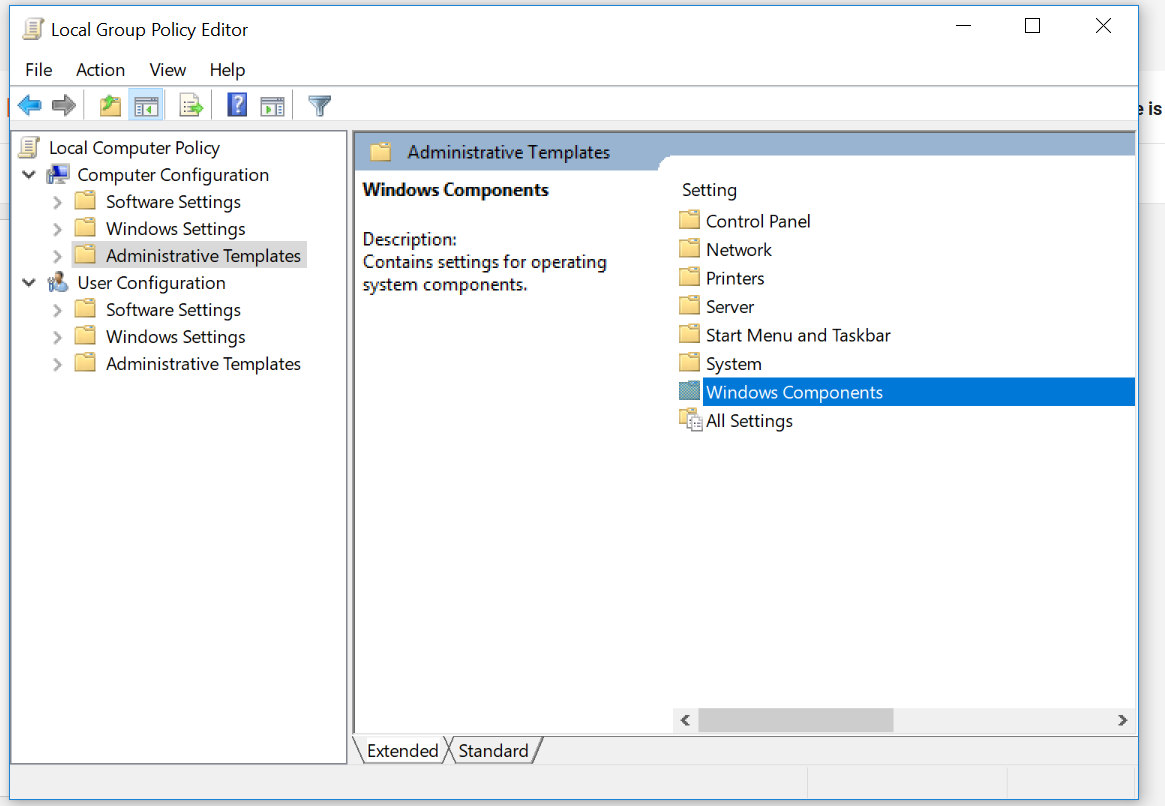
How to access memory card on computer if it says ''Access is Denied''?

Press(windows Button+R)
write-->> gpedit.msc
local group policy editor >computer configuration > Administrative templates >system > Removable > Storage Assess> Removable Disks: read access/write Access "need to sat not configured"

or

open Run
type gpedit.msc
click on the local group policy > computer configuration > administrative tools > all setting

make sure the" removable disks : deny execute access ( read / write ) " is set to the not configured